Legionella control is essential for maintaining safe water systems and meeting your legal duties. At Total Water Care, we deliver complete Legionella management – from initial risk assessment and sampling to ongoing compliance checks, remedial works and accurate digital reporting.
We’ve been helping clients stay compliant for over three decades. Our multi-skilled team works across healthcare, education, housing and commercial property, combining technical knowledge with an approachable, problem-solving attitude.
Every Legionella control programme starts with a detailed survey.
Our comprehensive programmes designed to optimise system performance, protect assets, and ensure regulatory compliance across heating, cooling and process water systems.
Supply, installation, and commissioning of equipment that improves water quality and reduces operating costs.
Complete end-to-end services that provide improved system reliability and efficiency, reduces energy and water consumption, and extends equipment life – meaning lower operational risk and long-term savings, as well as being compliant with standards such as ACOP L8, HSG274, BSRIA BG29/BG50.
Our new digital platform increases transparency and accountability.
TWC provides reassurance built on proven experience. With our people and systems in place, you’ll have the confidence that your buildings are safe, compliant, and well-managed.
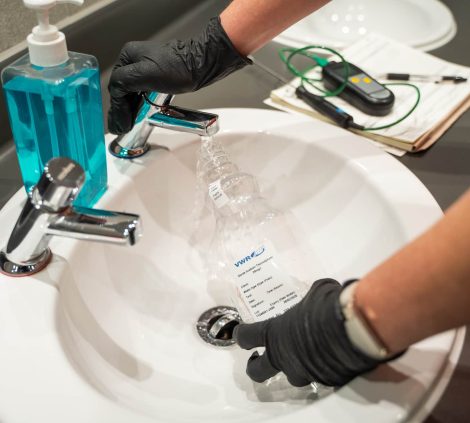
Legionella risk management means controlling the conditions in a building’s water systems that let Legionella bacteria grow and spread. It starts with a risk assessment, and then will continue with a written schema of control, regular temperature monitoring, flushing, cleaning, water sampling and any remedial work the assessment might identify.
Yes. Under the Health & Safety at Work etc Act 1974 and the COSHH Regulations 2002, employers and anyone in control of premises must identify and control the risk from Legionella. The HSE’s Approved Code of Practise L8 and its technical guidance HSG274 set out how to comply. Landlords have the same duty for residential properties they let.
The duty holder is responsible. This is usually the employer, landlord or the person in control of the property. They must appoint a competent “responsible person” to manage the control scheme day to day. Specialist tasks can be contracted out to a company like Total Water Care, but legal responsibility stays with the duty holder.
A typical programme includes:
Total Water Care can also handle water treatment, cooling tower and closed system services. All reports, photos and certificates are stored in our secure online portal.
ACoP L8 doesn’t set a fixed interval, but the assessment must be reviewed regularly and whenever something changes. Changes that trigger a review include alterations to the water system, a change in how the building is used, a change of responsible person, or monitoring results showing that control measures are failing. Many organisations review every two years as standard good practice.
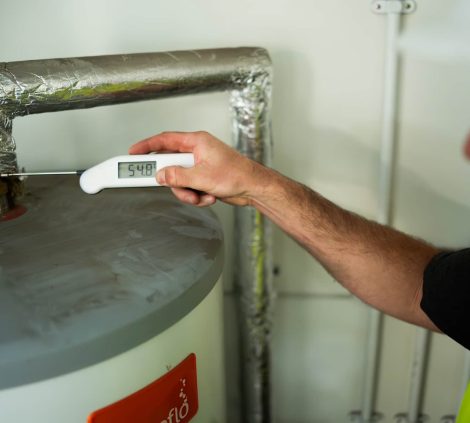
Legionella grows fastest between 20°C and 45°C. HSG274 recommends:
Routine temperature monitoring is one of the simplest ways to prove control.