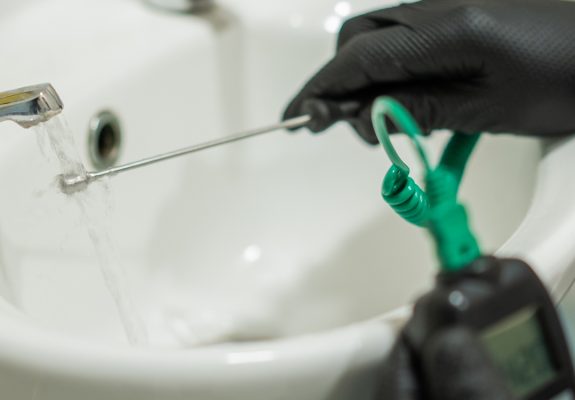
Reading is home to a wide range of businesses, from global tech firms and financial services companies to hospitality venues, healthcare providers, and private landlords. Whatever sector you operate in, if your premises have a water system, you are legally required to assess the risk it poses under the Health and Safety at Work Act 1974 and the HSE’s ACoP L8.
Many businesses assume that modern buildings or simple systems don’t require an assessment, however, this is rarely the case. Even a modest hot and cold water installation in a small office or flat carries an obligation. The good news is that with the right support, meeting your compliance duties is straightforward. Total Water Care can help you understand exactly where you stand.
Contact Us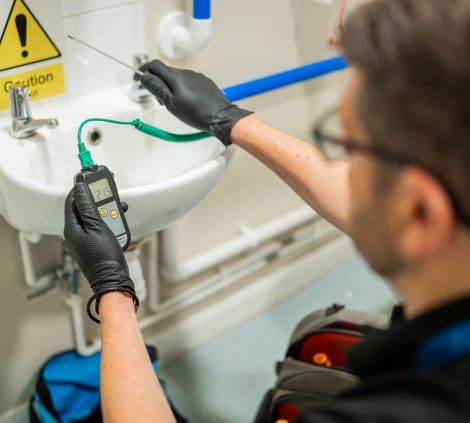
Reading’s business landscape is fast-moving, and the last thing any facilities manager or landlord needs is a compliance partner who creates more work than they solve. TWC’s approach is built around making Legionella compliance efficient and hassle-free. We work around your schedule, conduct thorough site surveys without disruption to your operations, and deliver reports that are well-structured, clearly written, and actionable.
We don’t pad our reports with irrelevant detail, we focus on what matters for your building, your risk profile, and your legal obligations. For organisations in Reading that take health and safety seriously but don’t want to wade through jargon, TWC is the straightforward choice for water hygiene compliance.
About Us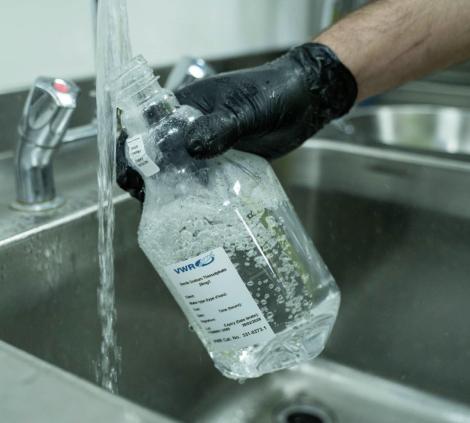
Legionella is a naturally occurring bacterium most commonly associated with Legionnaires’ disease, a potentially fatal pneumonia that spreads not through person-to-person contact, but through the inhalation of contaminated water droplets. The bacteria are unremarkable at low concentrations in natural waterways, but inside buildings, particularly where hot and cold water systems aren’t properly maintained, they can multiply to levels that pose a genuine risk to human health.
Stagnant water, inadequate temperatures, and a lack of regular monitoring are the main contributors to Legionella growth. For Reading businesses managing complex or multi-occupancy premises, the potential consequences of an unmanaged outbreak, reputational, legal, and human, make proactive water hygiene management essential.
Read More On Legionella Risk Management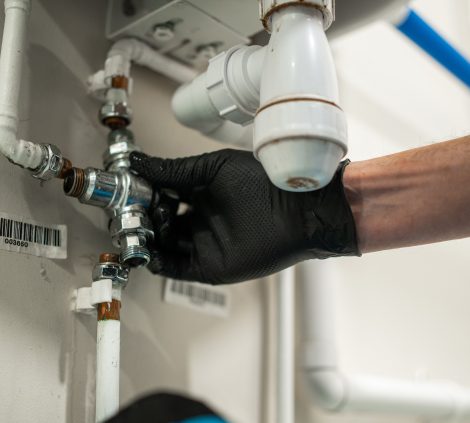
Every Legionella risk assessment we carry out in Reading follows a consistent, HSE-compliant methodology, but the way that applies to your property is always specific to you. Our assessor will work through your entire water system, including cold and hot water storage, distribution pipework, calorifiers, all outlets, and any ancillary systems such as cooling towers or water softeners.
We pay close attention to lesser-noticed risk factors such as dead legs in pipework, outlets that see little use, and storage tanks that may not be insulated correctly. Everything is captured in a detailed written report with risk ratings, supporting notes, and a clear schedule of recommended actions. No filler, just the information you need to act on. Read more about our full Legionella risk assessment service.
Costs vary based on the scope and complexity of your water systems. A small office will have very different requirements to a multi-storey building or industrial facility. We provide tailored quotes following a brief discussion about your property, so you know exactly what to expect before we visit. Contact us for a no-obligation price.
Yes. Employers and landlords in Reading are legally required to assess Legionella risk under the Health and Safety at Work Act 1974 and COSHH Regulations 2002. The HSE’s ACoP L8 confirms that a written risk assessment is expected as the baseline of any Legionella management programme.
A Legionella risk assessment is a formal survey and evaluation of your water systems, designed to identify anything that could encourage bacterial growth or spread. It results in a written report documenting the findings, risk levels, and the control measures needed to keep your building, and the people in it, safe.
The HSE advises that assessments are kept under regular review and updated following any changes to the system or its use. Most properties require a full reassessment every one to two years. Your TWC assessor will recommend a review cycle appropriate to your property’s risk level.
Legionnaires’ disease is caused by breathing in microscopic water droplets carrying Legionella bacteria. The conditions that allow bacteria to reach dangerous levels include water temperatures in the 20-45°C range, prolonged stagnation, and the presence of sediment or biofilm. Cooling towers, showers, and storage tanks are frequent sources in commercial buildings.
You’ll receive a prioritised list of recommended actions. High-risk items should be addressed immediately. You’ll also need an ongoing compliance programme, regular temperature monitoring, periodic sampling, records management, and scheduled reviews. TWC can design and manage that programme for you if needed.