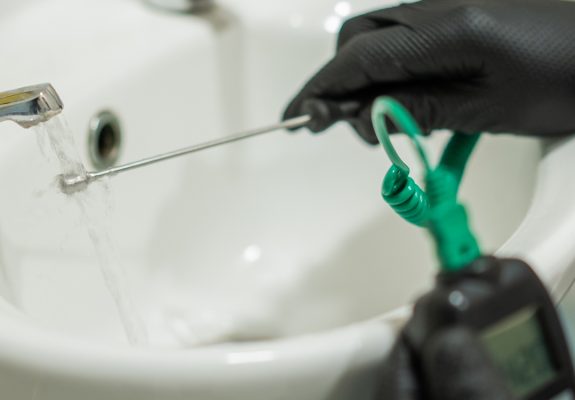
Guildford’s mix of professional services firms, educational institutions, hospitality businesses, and residential developments makes it a town where Legionella compliance questions arise across a wide range of property types. If you are an employer, a commercial or residential landlord, or a facilities manager responsible for a building with a water system, then yes, you need a Legionella risk assessment.
The obligation stems from the Health and Safety at Work Act 1974 and the HSE’s Approved Code of Practice L8, and it applies regardless of how simple or how complex your water system might be. A modern building with a straightforward layout still requires a documented assessment. Total Water Care can confirm your position, carry out the survey, and give you the compliance documentation you need.
Contact Us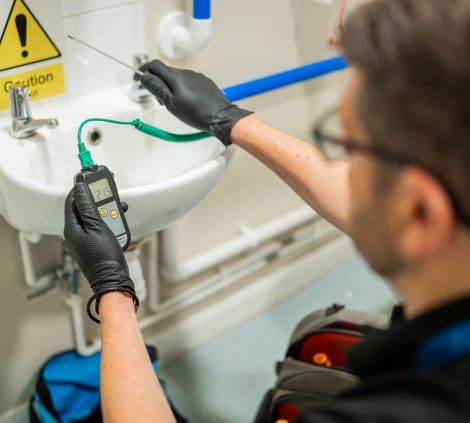
Guildford sits at the heart of the Surrey professional services corridor, an area where standards are high, and businesses expect their service partners to match them. TWC does. Our Legionella risk assessments are carried out by qualified, experienced assessors who understand what good compliance actually looks like, not just what passes a basic review.
We take the time to understand your building, your operation, and any historical issues with your water systems before we write a single line of our report. The result is an assessment that stands up to scrutiny and gives you real confidence in your compliance position. Whether you’re a first-time client or reviewing your current provider, we think you’ll notice the difference.
About Us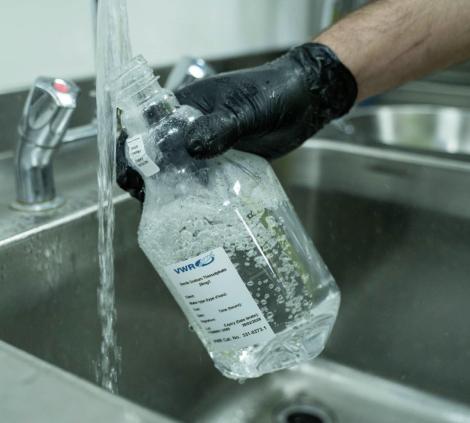
Legionella pneumophila is a bacterium that causes Legionnaires’ disease, a form of pneumonia recognised as one of the most serious waterborne health risks in the built environment. Unlike many bacterial illnesses, it’s not transmitted between people, it spreads through the inhalation of contaminated aerosol particles generated by water systems in buildings. Cooling towers, domestic hot and cold water systems, spa pools, and ornamental fountains are all potential sources when not properly managed.
For Guildford property managers overseeing older buildings with complex water systems, the risks are particularly relevant, due to ageing infrastructure, temperature inconsistencies, and infrequently used outlets which all create conditions where Legionella can establish itself. Prevention relies entirely on assessment, ongoing monitoring, and disciplined water hygiene management.
Read More On Legionella Risk Management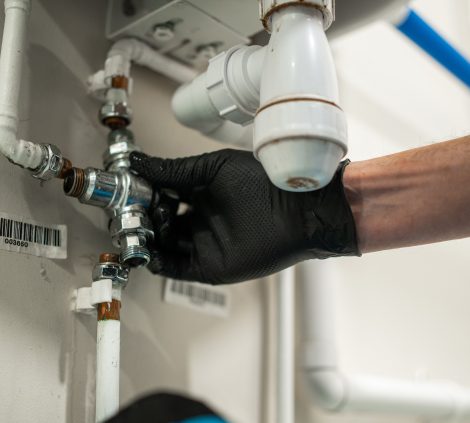
We approach every Legionella risk assessment in Guildford with the same mindset by understanding the building first, then assessing the risk. Our qualified assessor begins with a comprehensive walkthrough survey of all water systems on site, cold water storage, hot water distribution, calorifiers, all outlets and ancillary systems. We don’t just look at what’s there, we look at how it’s configured, how it’s been maintained, and whether any changes have been made that could have introduced new risk points.
Temperature checks, observation of system condition, and a review of any existing records all inform our findings. The completed risk assessment report is fully compliant with ACoP L8 and HSG274, clearly written, and structured to make your next steps immediately clear. Read more about our full Legionella risk assessment service.
Pricing is tailored to the property, so a straightforward residential assessment has different requirements to a large commercial building or complex multi-system site. We provide clear, itemised quotes after a short conversation about your premises. Contact TWC to discuss your specific situation and receive a no-obligation price.
Yes. Employers and landlords are legally required to assess and control Legionella risk under the Health and Safety at Work Act 1974 and the COSHH Regulations 2002. The HSE’s ACoP L8 outlines the expectation for a formal, written risk assessment, and the HSE has prosecuted duty holders who have failed to comply, including following outbreaks.
A Legionella risk assessment is a comprehensive survey of your building’s water systems carried out by a competent expert. It identifies conditions that could promote bacterial growth, assigns risk ratings, and sets out the control measures required to protect building users. The resulting report forms the foundation of your Legionella management programme.
At a minimum, assessments should be reviewed every two years, but higher-risk premises, or those that have undergone changes to their water systems or use, may need more frequent review. The HSE’s guidance is clear that assessments should be kept current. TWC can advise on the appropriate review cycle for your property.
Legionnaires’ disease is caused by inhaling fine water droplets carrying Legionella bacteria. The bacteria multiply rapidly in water systems where temperatures fall in the 20-45°C danger zone, where stagnation occurs, or where biofilm and deposits have been allowed to accumulate. Complex water systems in older commercial buildings carry a higher inherent risk.
The report will set out a prioritised action plan, begin with any items flagged as high or urgent risk. Alongside addressing those issues, you’ll need to establish a Legionella management programme covering temperature monitoring, water sampling, outlet flushing, and accurate record-keeping. TWC can support you with all of this.