Swindon has seen substantial commercial and residential growth over the past two decades, and with that growth comes a growing base of property owners and employers who carry a legal duty to manage Legionella risk.
Under the Health and Safety at Work Act 1974 and the HSE’s Approved Code of Practice L8, any person or organisation that is responsible for premises with a water system must assess the potential for Legionella to colonise that system and cause harm. This covers everything from large distribution centres and office campuses to small commercial units and buy-to-let properties. If you’re unsure whether you need an assessment, the safest assumption is that you do. Total Water Care can confirm your obligations quickly and efficiently.
Contact Us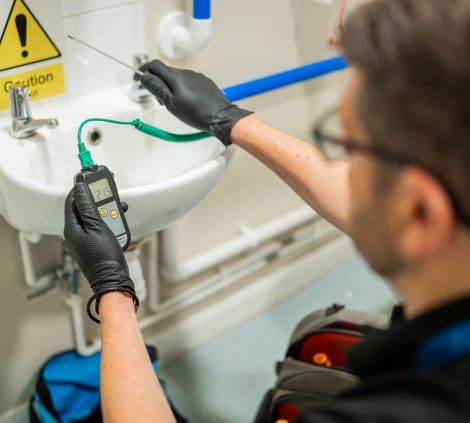
What sets TWC apart isn’t just technical competence, it’s the way we engage with our clients. Swindon’s business community spans logistics and manufacturing through to retail, education, and professional services, and we work across all of them. We bring the same level of rigour to a straightforward domestic risk assessment as we do to a complex multi-system industrial survey.
Our reports are detailed where they need to be and direct where they can be, and our team is always available to talk through findings in plain terms. We understand that compliance is a responsibility, not just paperwork, and we’re here to make sure you can fulfil it confidently. Talk to us about your Legionella management needs in Swindon.
About Us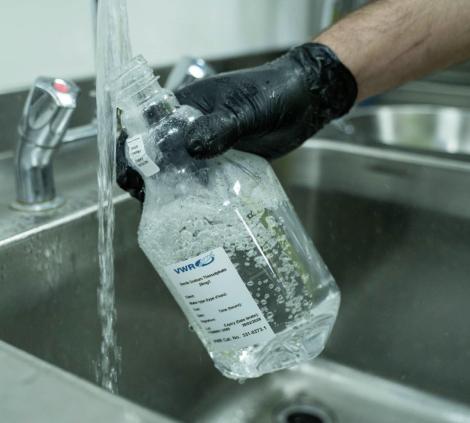
Legionella risks are very much real-world. The Legionella bacterium was identified in 1976 following a fatal outbreak that claimed 34 lives at an American Legion convention in Philadelphia. Since then, advances in water hygiene understanding have significantly improved our ability to control it, but only when the right measures are actually in place.
The bacteria flourish in systems where water temperatures stray into the 20–45°C range or where water sits unused for extended periods. When contaminated droplets are inhaled from a shower, tap, or cooling tower, they can cause Legionnaires’ disease, a serious pneumonia that remains potentially fatal, particularly in older and immunocompromised individuals.
Read More On Legionella Risk Management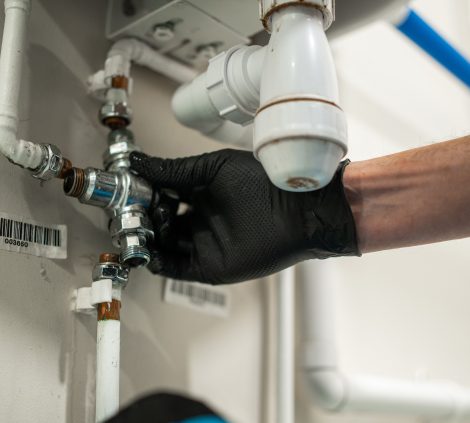
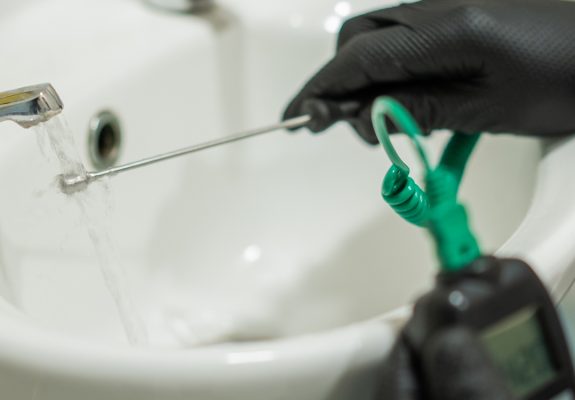
Our assessment process in Swindon is thorough without being overcomplicated. We begin with a structured site visit, during which our qualified assessor carries out a full inspection of your water systems, covering cold water storage, hot water distribution, calorifiers, outlets, and any specialist plant. We assess the condition of each element, check temperatures, examine maintenance records, and look carefully at system configuration for anything that could create risk.
We also take the time to understand how the building is actually used, including occupancy patterns and changes in use, which can significantly affect Legionella risk. The result is a comprehensive, written risk assessment report, complete with individual risk ratings and a prioritised action schedule aligned to ACoP L8 and HSG274. Read more about our full Legionella risk assessment service.
Pricing is based on your specific property. From the size of your building, the number and type of water systems, and the scope of the assessment required. We don’t publish blanket rates because they rarely reflect the actual job. Contact our team with some basic details about your premises, and we’ll provide a prompt, transparent quote.
It is. The legal basis sits in the Health and Safety at Work Act 1974 and the COSHH Regulations 2002, with specific guidance provided in the HSE’s ACoP L8. All duty holders, employers and landlords included, must assess and manage Legionella risk, and a written risk assessment is the expected standard.
A structured survey of your building’s water systems, identifying anything that could allow Legionella bacteria to grow or spread. The assessment produces a written report with findings, risk ratings, and the recommended actions needed to keep your water system safe and your property compliant.
It depends on the type of property and the complexity of its systems. A full review every one to two years is a reasonable baseline, but significant changes including new equipment, building alterations, or changes in occupancy, should trigger an earlier reassessment. Your assessor will advise on the appropriate frequency.
Legionnaires’ disease is contracted by inhaling contaminated water vapour or aerosol droplets. The bacteria responsible develop in water systems where temperatures sit between 20-45°C, where stagnation occurs, or where biofilm and sediment accumulate. Cooling towers, shower heads, and water storage tanks are common risk points.
Implement the actions in the report, working through them in priority order. Beyond that, you’ll need an ongoing Legionella management plan covering temperature monitoring, periodic water sampling, flushing of low-use outlets, and proper record-keeping. TWC can take on all or part of that programme.